An AI-powered writing and editorial workspace built to reduce newsroom friction, support faster story production, and reinforce credibility in modern journalism.
(1 of 2 parts of the project with CNN)
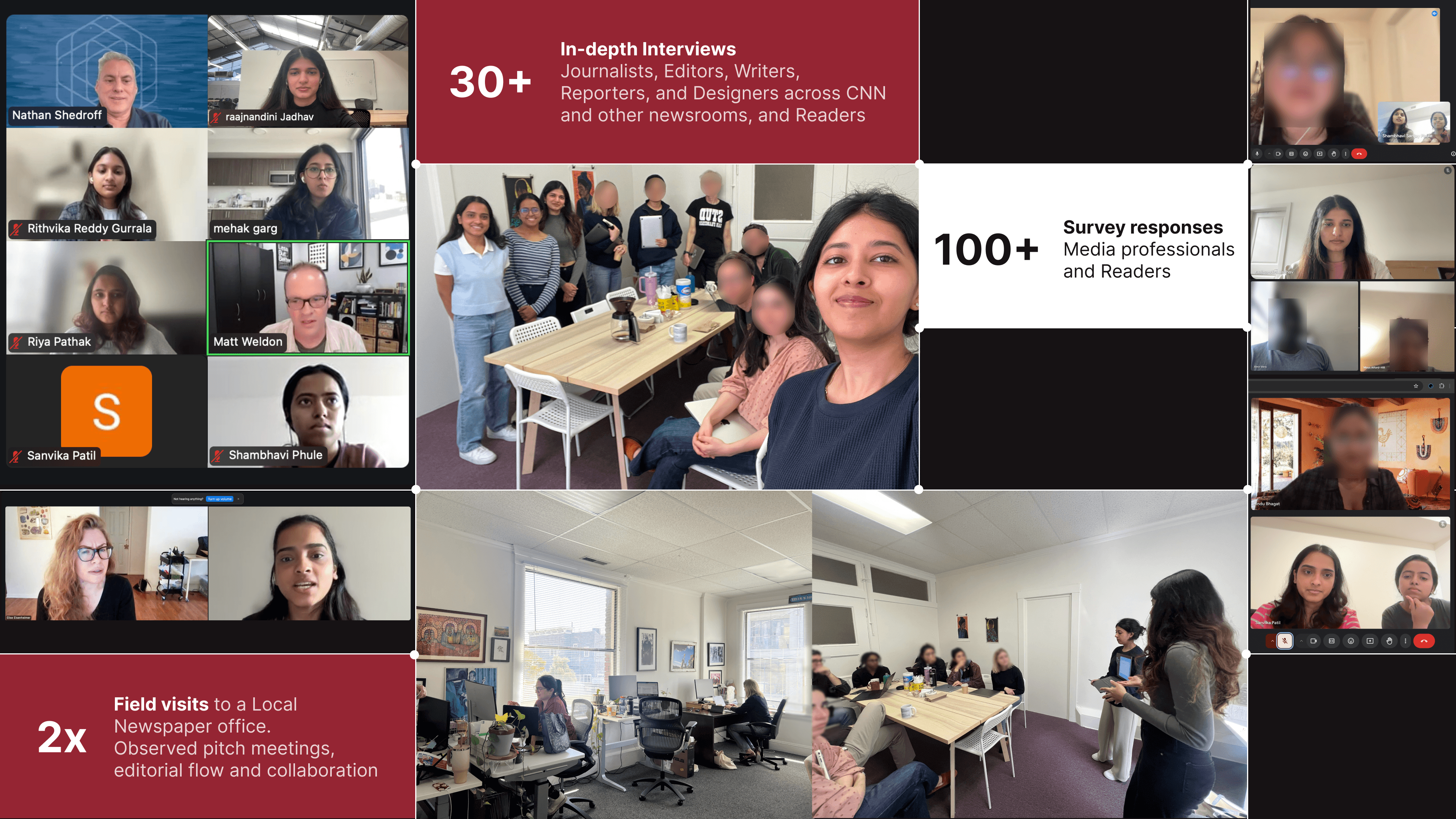
I led the project end-to-end- from research to final design: conducted 10+ journalist and editor interviews (CNN, U.S. local newsrooms), synthesized insights from newsroom field visits, drove ideation pivots (plugin → CMS → standalone), led workflow mapping and AI assistant backend design, defined responsible AI principles, built wireframes, prototypes, design system, and conducted usability testing.
AI workflow design, Information architecture, Conversational AI systems, Rapid prototyping & usability testing, Design systems, Data-informed product strategy, Trust & safety design, Cross-functional collaboration, Visual storytelling & systems thinking
CNN PRISM Video demo

Journalism today operates under unprecedented pressure - rapid misinformation, declining public trust, and the demand to publish accurate stories at speed. For organizations like CNN, reporters must verify facts, collaborate with editors, and uphold rigorous standards while navigating fragmented tools and shrinking timelines. As accuracy becomes more critical and conditions more complex, the need for a unified, trustworthy newsroom workflow has never been greater.
CNN challenged us to tackle one of modern journalism's biggest problems: "As misinformation spreads and public trust erodes, how do you give journalists the tools to report with speed and credibility?"
Impact
By consolidating research, drafting, and validation into a single workspace, Prism showed potential for :

Why design for Journalists?
Research Findings
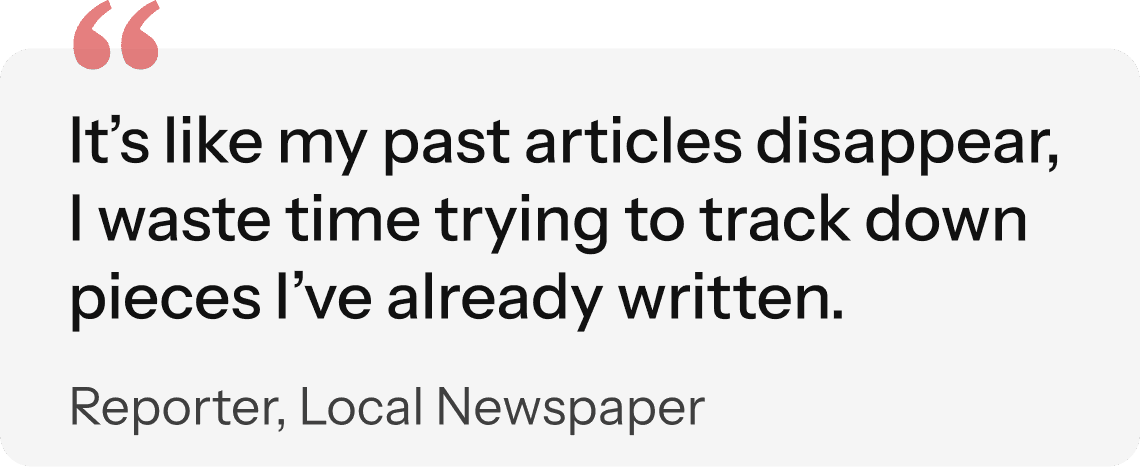
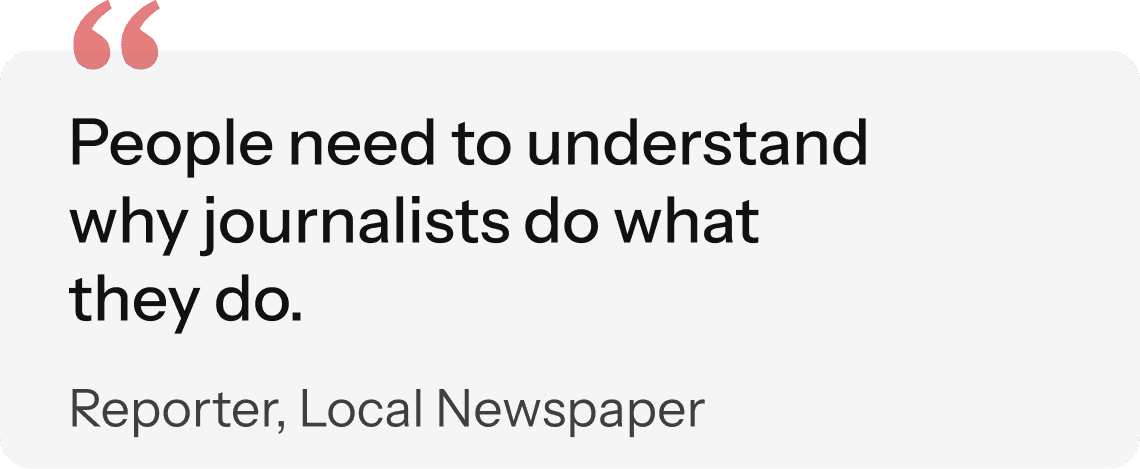
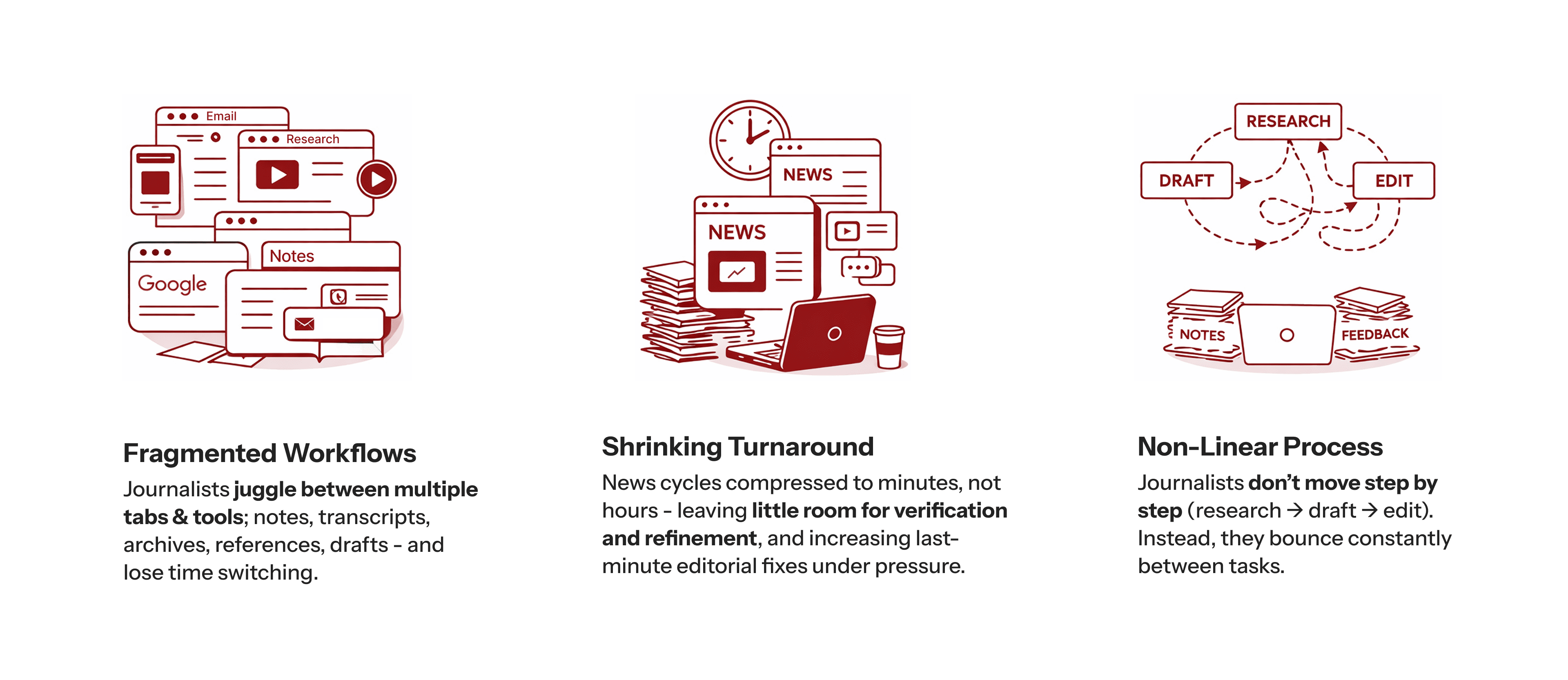
Problems Identified
How might we improve editorial workflow while maintaining accuracy, transparency, and trust - without replacing human judgment?
Principles

Split-Panel Layout
Why: Early tests with stacked tabs frustrated journalists - they hated losing sight of their draft. The split-panel design keeps research and writing in view simultaneously.
Left - Research Panel

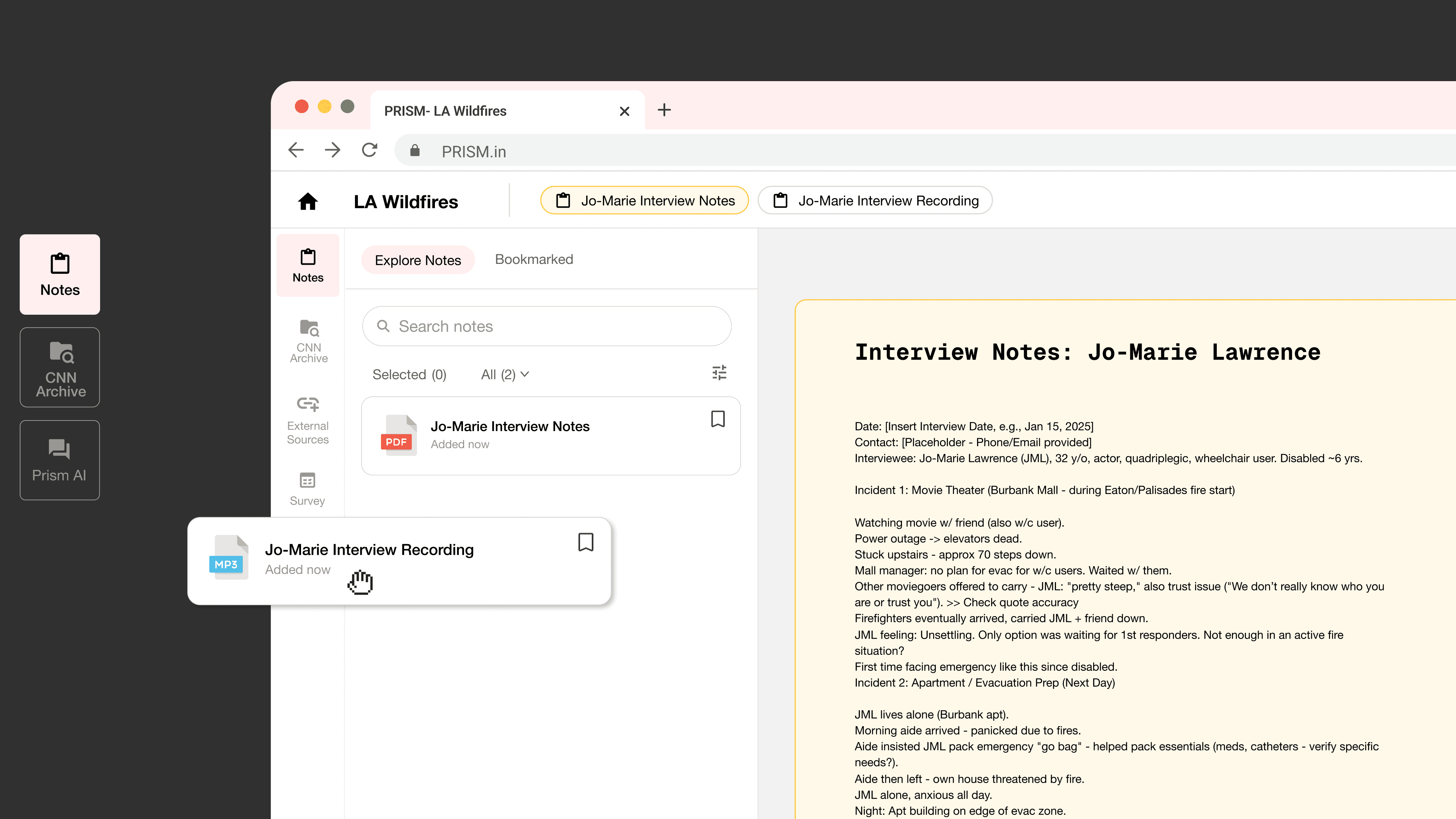
Centralized space for interview notes, transcripts, and audio uploads - keeping all reporting material accessible while writing.
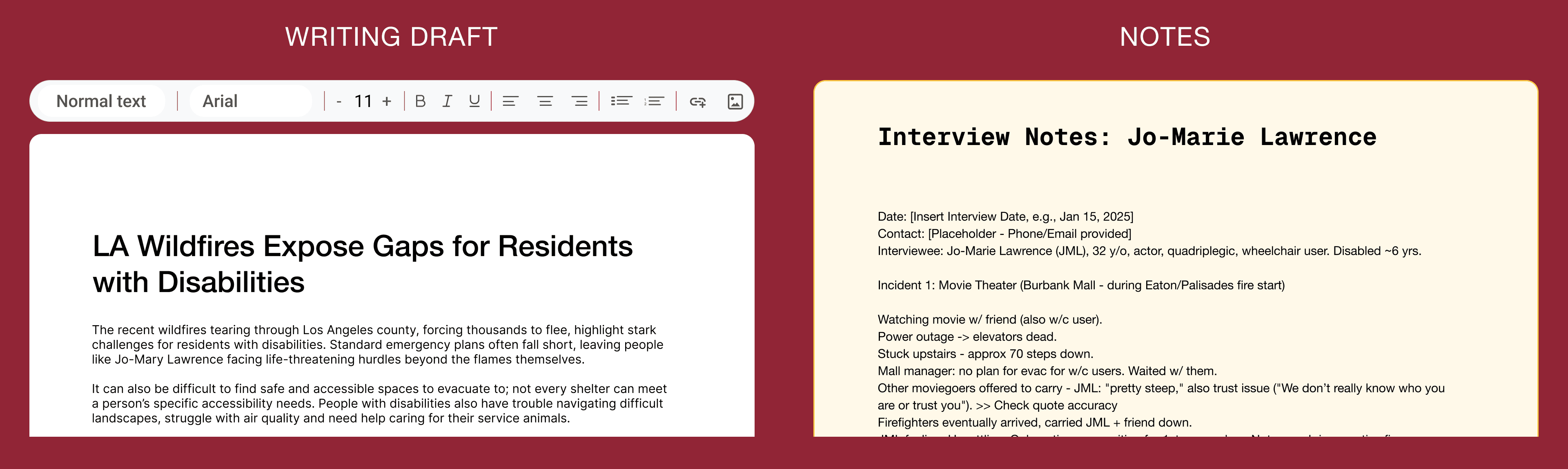
Clear visual separation between draft and source material to prevent context confusion.
Left - Research Panel
Brings CNN archives and trusted external references into one workspace, reducing research friction and keeping credible context within reach.
Left - Research Panel
Context-aware AI assistance that surfaces quotes, themes, and past coverage from notes, archives, and sources - without writing the story for the journalist.
Centre- Writing Panel

A focused drafting space where journalists can write, organize references, and pull insights directly into the story without breaking flow.
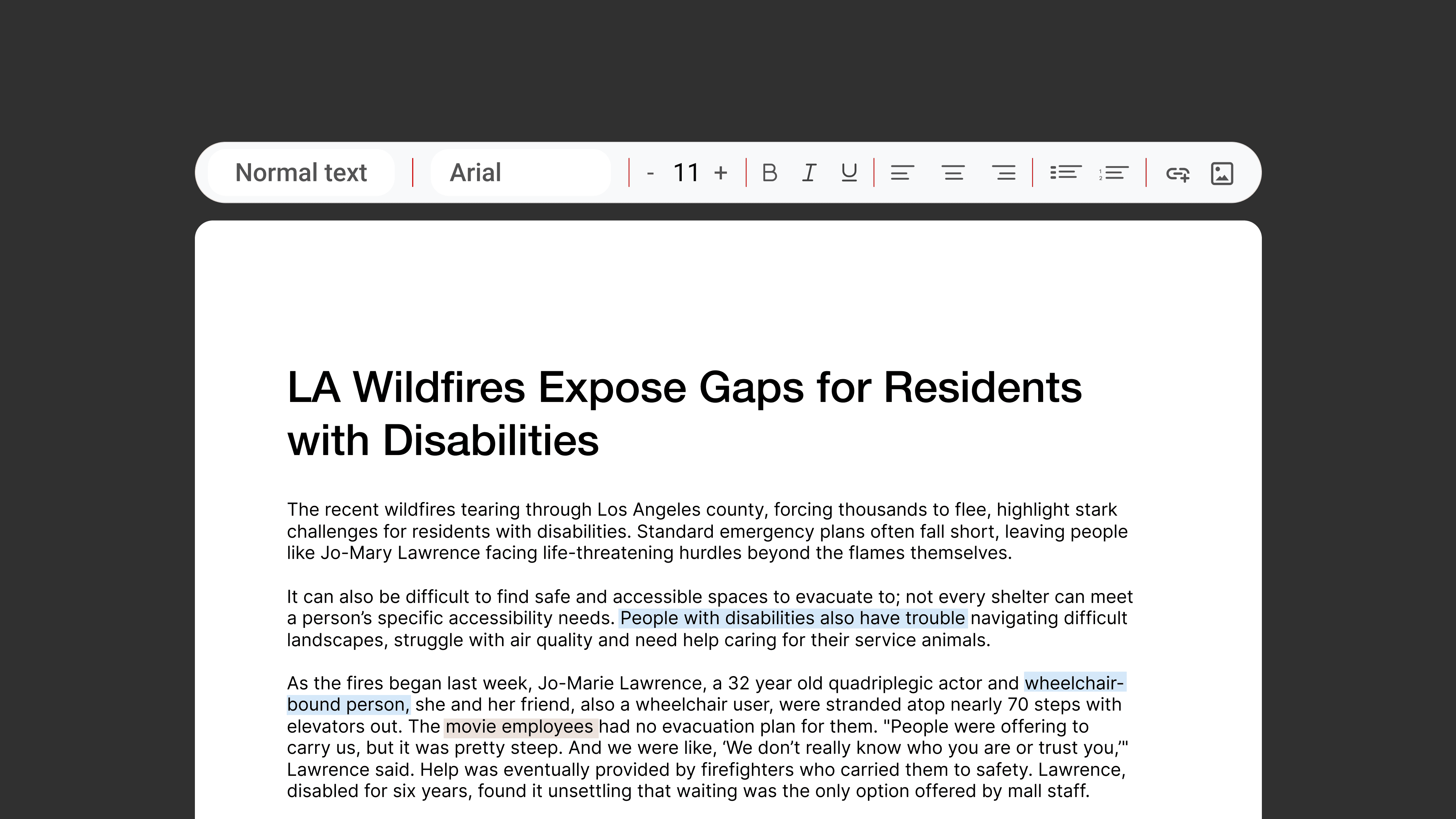
Right- Suggestions Panel

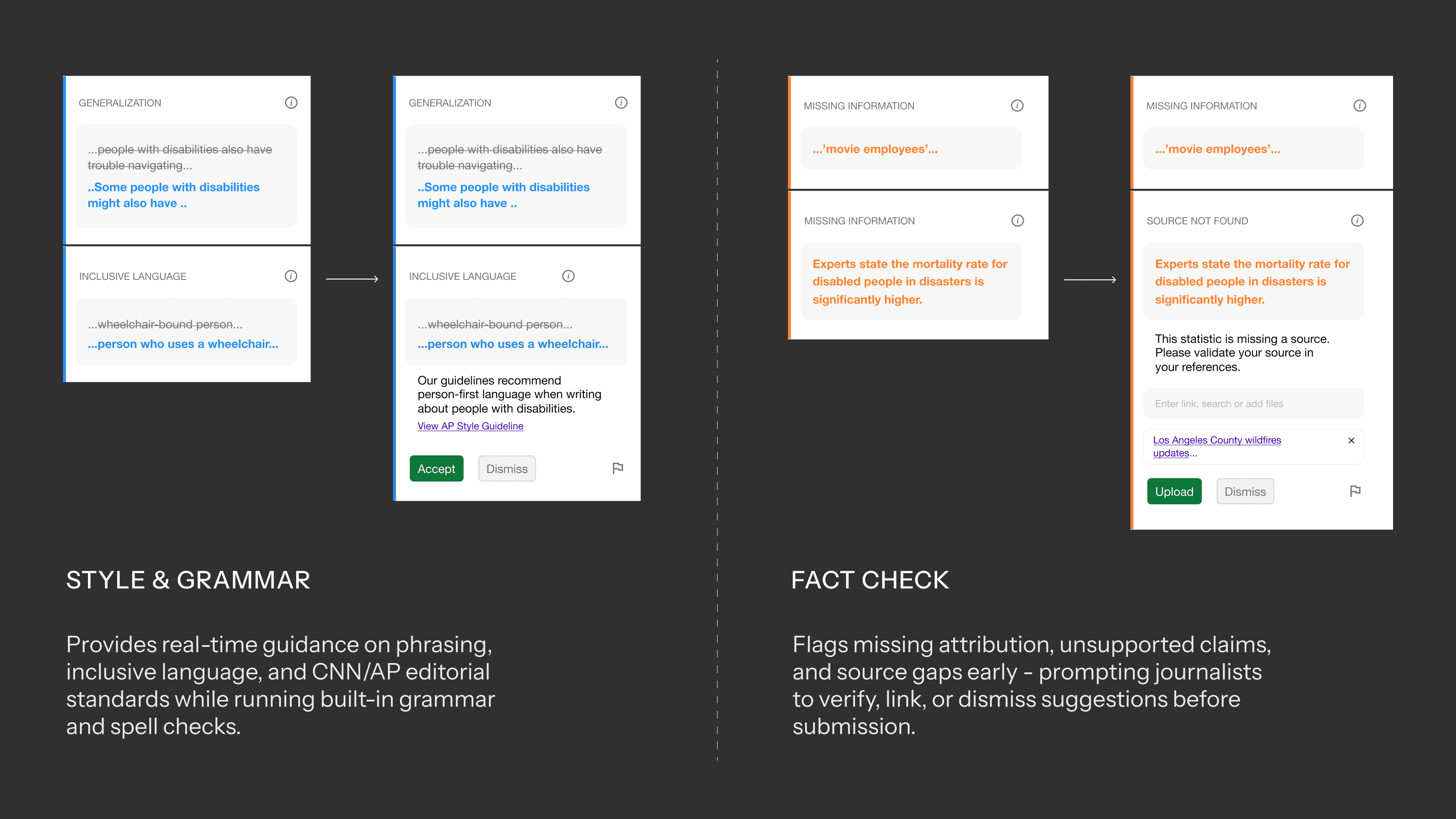
Real-time editorial guidance for style, grammar, inclusivity, and fact-checking, designed to support faster publishing while preserving journalistic control.
2/3
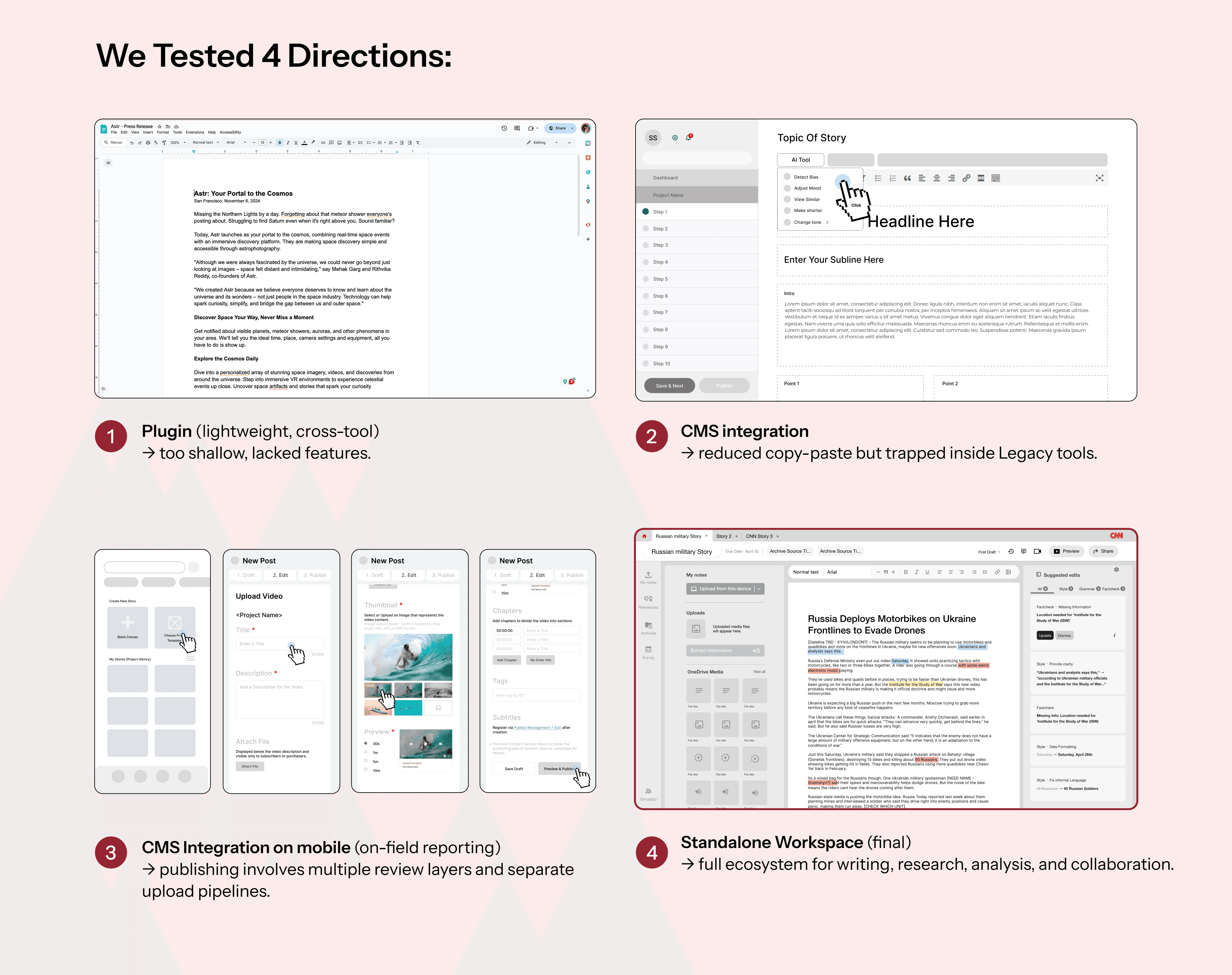
Ideation Process
3/3
Usability Testing
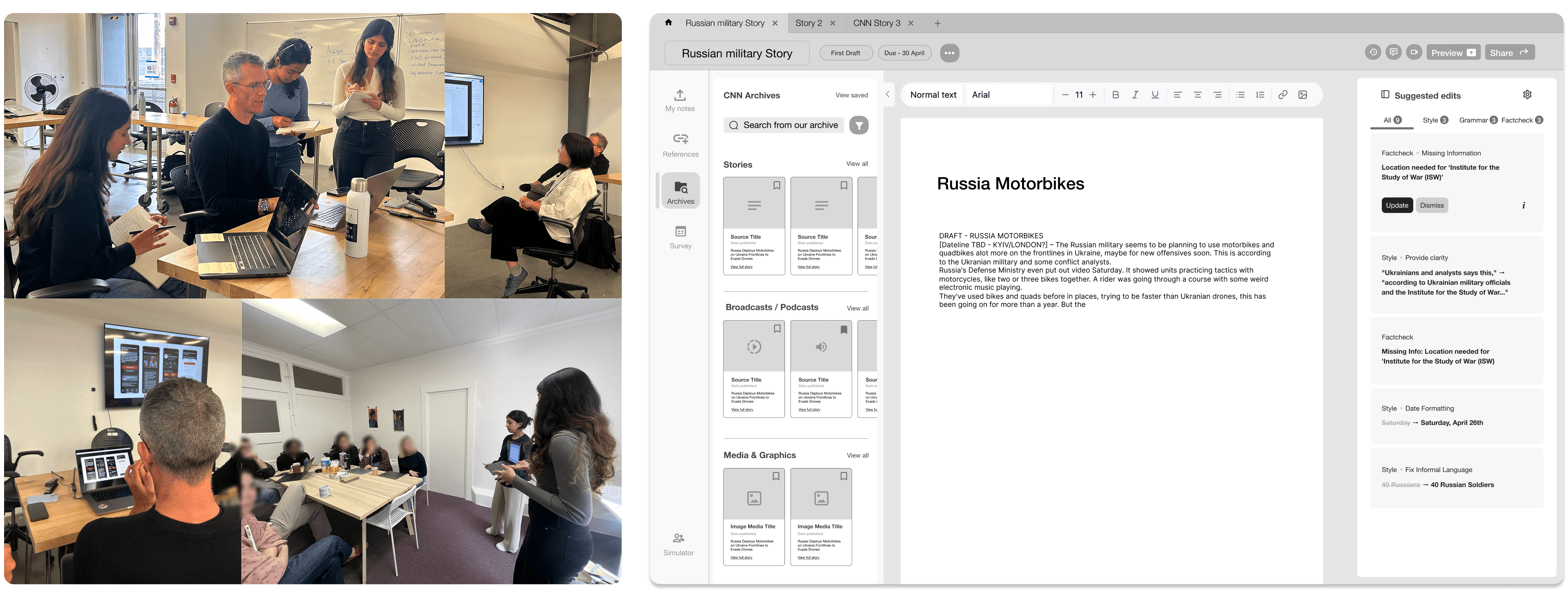
Key Improvements after Usability Testing

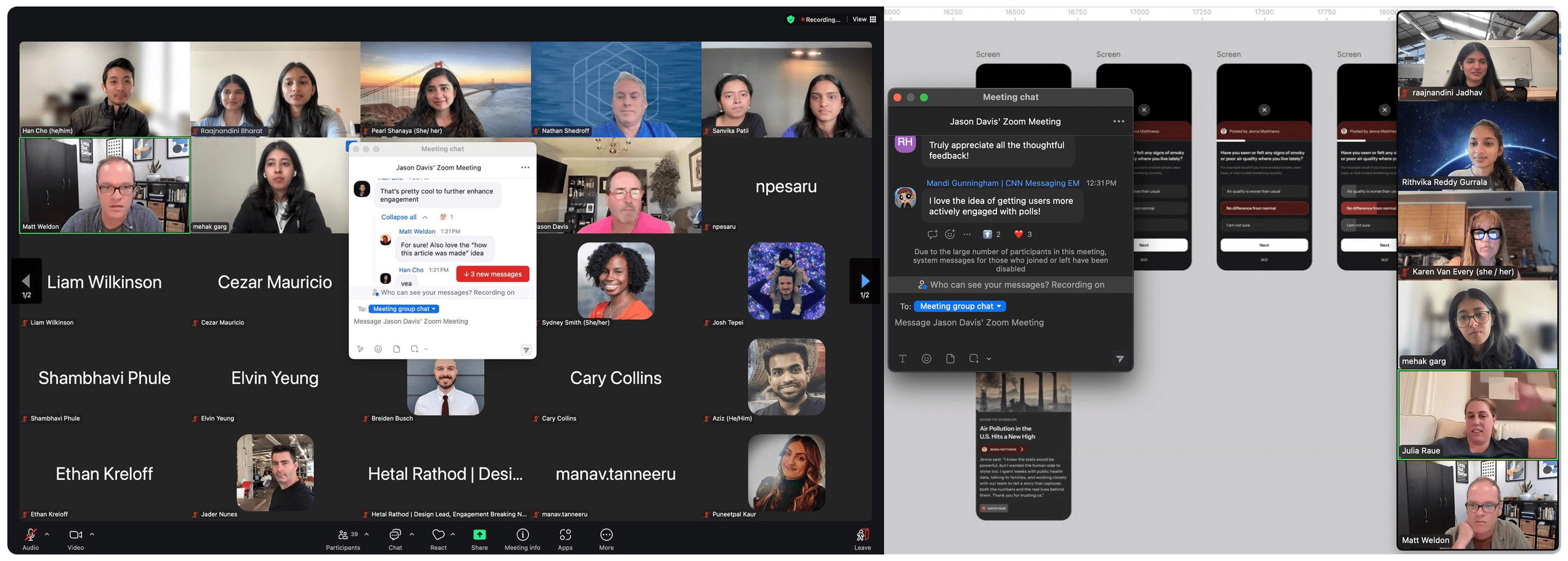
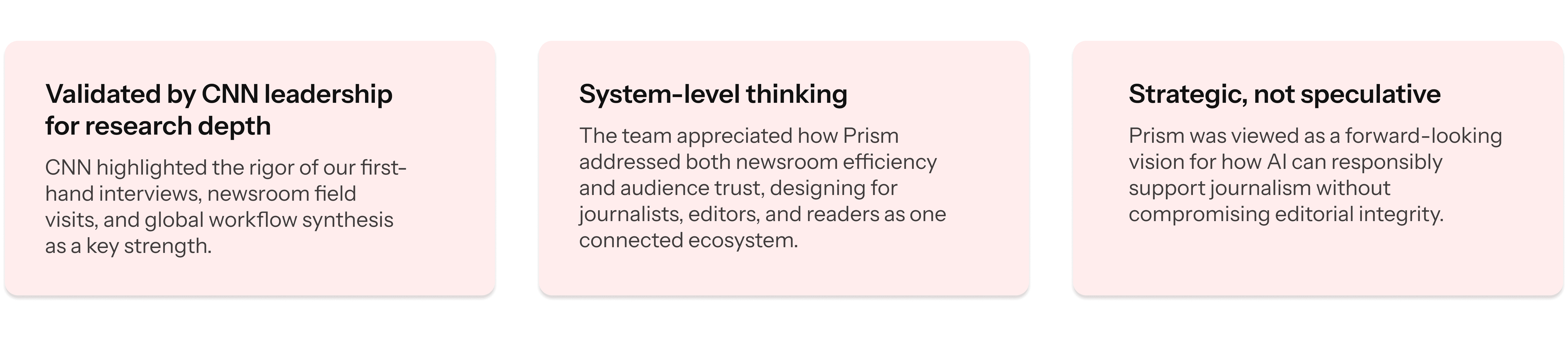
Feedback from the CNN teams
News isn’t created in clean, linear steps. Building tools that respect interruption, back-and-forth thinking, and constant context-switching led to far more adoption than forcing a “perfect” process.
Designing for responsibility early
Solving for the system, not just the user